
What Is a Genogram Used For? 7 Real-World Uses
A genogram is more than a fancy family tree. Here are the seven ways therapists, social workers, nurses, and families actually put genograms to work.
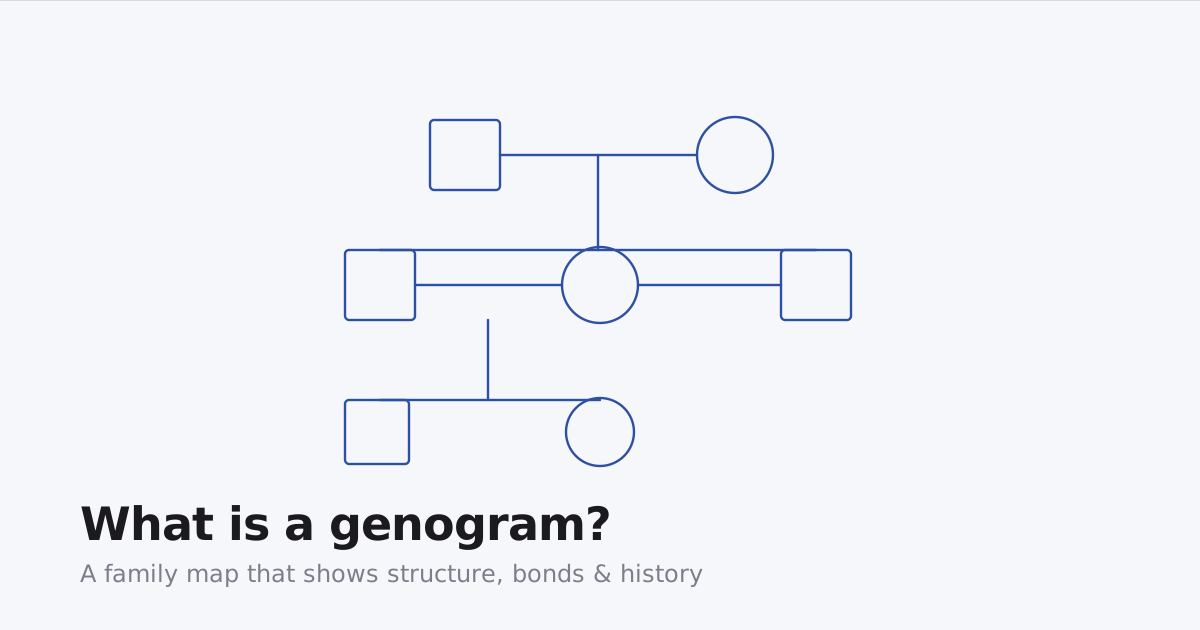
A genogram looks like a family tree at first glance, but it answers a different question. A family tree tells you who is related. A genogram tells you how — the emotional bonds, the health history, and the patterns that repeat across generations. That extra layer is exactly why so many professions reach for it.
Here are seven of the most common ways genograms get used in the real world.
1. Mapping family dynamics in therapy
Therapists and counselors use genograms to make invisible patterns visible. Drawing three generations of a family often reveals a recurring story — estrangement that skips a generation, anxiety passed from parent to child, or a role (the caretaker, the scapegoat) that keeps getting handed down.
Once a pattern is on paper, a family can talk about it instead of repeating it.
2. Assessing risk and strengths in social work
In social work, a genogram is a core assessment tool. It records the family structure, the emotional bonds, and the strengths and risks that shape a client’s situation:
- Who lives in the household, and who supports it from outside
- Where the close, distant, conflicted, and estranged relationships are
- Significant health, mental-health, and substance-use history
- Key life events: births, losses, separations, and moves
3. Tracking hereditary health risk
Nurses, doctors, and genetic counselors use medical genograms to trace conditions across generations. Shaded symbols mark illnesses, so hereditary risk for things like heart disease or diabetes is visible at a glance — far faster than reading a written history.
4. Supporting students and coursework
Genograms are a standard assignment in social work, nursing, psychology, and counseling programs. A three-generation genogram with the correct symbols is usually the expected format, because three generations is enough to reveal patterns while staying readable.
5. Guiding family business and estate planning
Family business advisors map relationships and roles to plan a smoother leadership transition. Seeing who holds influence — and where the tension sits — makes succession planning far less guesswork.
6. Preserving a family story
Families build genograms simply to capture their own history: who married whom, who moved where, and the relationships that defined each generation. It is a richer keepsake than a names-and-dates tree.
7. Research and case documentation
Researchers and clinicians use genograms to document complex family structures in a consistent, citation-ready format that other professionals can read without explanation.
The common thread
Every one of these uses comes back to the same idea: a genogram captures relationships and patterns, not just lineage. If you only need to know who descended from whom, a family tree is enough. The moment you care about how a family functions, you want a genogram.
Ready to try one? You can build a genogram for free — describe your family in plain English and let AI draft the first version, then refine it with the standard symbols.